2022年2月27日 星期日

Some Other Movies From 1971


The Top Movies of 1971

Fiddler on the Roof, Billy Jack (wonderfully terrible), The French Connection (still great), Summer of '42, Diamonds are Forever (Mr. Wint and Mr. Kidd!), Dirty Harry (classic), A Clockwork Orange (also classic), Carnal Knowledge, The Last Picture Show (one of the best movies ever made), Willard, Sunday Bloody Sunday (really overlooked), Klute (very good), The Boy Friend, The Go-Between, The Hospital (marvelously overwrought) and Shaft (the beginning of blaxploitation).


Popular Albums of 1971

Aqualung by Jethro Tull, Master of Reality by Black Sabbath, The Yes Album by Yes, L.A. Woman by The Doors, Imagine by John Lennon, Sticky Fingers by The Rolling Stones, Who's Next by The Who, Led Zeppelin IV by Led Zeppelin, 11-17-70 by Elton John, Electric Warrior by T-Rex, What's Going On by Marvin Gaye, Hunky Dory by David Bowie, Nursery Cryme by Genesis, Shaft Soundtrack by Isaac Hayes, Fragile by Yes, There's a Riot Goin' On by Sly and the Family Stone, Weather Report by Weather Report, At Fillmore East by The Allman Brothers Band, and Tapestry by Carol King.

...and I could go on.  Pardon my French, but 1971 was a great f&%king year for music.  Check out this list at Udiscovermusic for more excellent tunes.  The albums listed there should keep anyone busy for quite a while.


1971 Books Later Adapted Into Movies

The Exorcist by William Peter Blatty, Fear and Loathing in Las Vegas by Hunter S. Thompson, The Lorax by Dr. Seuss, The Day of the Jackal by Frederick Forsyth, Mrs. Brisby and the Rats of NIMH by Robert C. O'Brien, The Winds of War by Herman Wouk, Maurice by E.M. Forster and Hell House by Richard Matheson.


Major Sporting Events of 1971

The Baltimore Colts defeated the Dallas Cowboys to win the Superbowl, the Pittsburgh Pirates won the World Series, the Milwaukee Bucks won the NBA Finals, Joe Frazier defeated Muhammad Ali in Madison Square Garden, Eddy Merckx won the Tour de France, the Montreal Canadiens won the Stanley Cup and Billie Jean King won the U.S. Open.


Comic Books in 1971

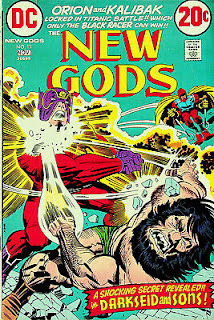
DC Comics published New Gods #1, the Squadron Supreme first appeared in Avengers #85, Mister Miracle first appeared in Mister Miracle #1, Ra's a Ghul first appeared in Batman #232, Swamp Thing first appeared in House of Secrets #92, Neal Adams began his run on The Avengers, and John Stewart made his first appearance in Green Lantern #87.


Excellent

1. Walkabout

A brother and sister learn to survive after being stranded in the Australian Outback.  Nicholas Roeg directed this movie, which was one of the first movies in the "Australian New Wave" movement.  It's a beautifully photographed film, led by the doubly beautiful Jenny Agutter.

2. The Decameron

Pier Paulo Pasolini's bawdy take on the Middle Ages.  It's the first movie in Pasolini's "Life Trilogy," coming a year before The Canterbury Tales and three years before The Arabian Nights.  I haven't read Boccaccio's stories, but even to someone with my superficial knowledge it's obvious that the original work was more a point of departure than something faithfully reproduced on film.  I think this might be my favorite of the three films in the trilogy.


About as Early 70s as You Can Get

1. The Abominable Dr. Phibes

Vincent Price stars as a disfigured man out for revenge.  As with the sequel the sets are the real highlight, and the inexplicable plot points only add to the movie's charm.  I'm pretty sure those bats are fruit bats... and would grasshoppers really eat their way through someone's face?  If you can suspend your disbelief (possibly with the aid of alcohol), this movie's a good time.

Someone should remake The Abominable Dr. Phibes.  In the right hands it would be a winner.

Fun Fact: Caroline Munro IS in this one, but her name doesn't appear in the credits.  This is because she was under contract with Hammer Films at the time, and thus unable to receive either a screen credit or payment from a competing studio.  She talks about the experience in this interview at around the 16 minute mark.

Sadness: There were several sequels planned to follow the second film, Dr. Phibes Rises Again, but unfortunately these sequels never happened.


Weird Enough to be Worth Your Time

1. The Blood On Satan's Claw

Pairs well with 1973's The Wicker Man.

Were I in charge of remaking this movie, I'd probably set it in the modern day, and add a chemical spill.  A chemical spill would add another dimension to the skin transformations seen in this movie, casting doubt on the characters' belief in the supernatural.  Aside from that this story of a demonic presence in the English countryside still works very well, and the ending is very satisfying.

Fun Fact: The director of this movie is distantly related to author H. Rider Haggard, who wrote King Solomon's Mines.

2. The Hunting Party

So... they give her some peaches and the rape thing is OK?  We're all friends now?

Parts of this movie haven't aged well, but it does have a lot going for it.  Oliver Reed stars as an outlaw who kidnaps Candice Bergen in the hope that she'll teach him how to read, with Gene Hackman as her outraged husband, the local sheriff.  I like the fact that everyone in this movie (minus Bergen's character) is a bastard, and I like that it was willing to cross a certain line, but yeah, it's not exactly a "female empowerment" type movie.  Then again, being a woman in the Old West wasn't an easy thing to be regardless.

Critics at the time despised this movie.  I think, however, that it's aged better than some other films from the same period.  Just compare this to whatever John Wayne was doing at the time.  It's a bit tactless, yes, but it's also a lot more convincing that whatever the Duke was dishing out that year.  

Oh, and if you enjoyed Hackman's performance in Unforgiven he's all over this movie, doing pretty much the same thing.

3. The Hellstrom Chronicle

The "science" at play in this documentary is little more than biblical thinking infused with paranoia, but I sometimes miss documentaries like this one.  The 70s was a great decade for disturbing documentaries, of which this movie is a prime example.  Anyone else fondly remember In Search Of... with Leonard Nimoy?  That show really freaked me out as a young boy.

Fun Fact 1: Despite its largely fictitious nature, this film would go on to win the Oscar for Best Documentary in 1972.

Fun Fact 2: This movie is the inspiration for Frank Herbert's novel Hellstrom's Hive.  Some of the concepts in Hellstrom's Hive, which revolved around an insect-like society, were later incorporated into his Dune novels.  If you can manage to track down a copy of Hellstrom's Hive it's a good book.


Some Good Ones

1. 10 Rillington Place

A landlord takes advantage of ignorant neighbors out of a lust for murder.  Great performances from Richard Attenborough and John Hurt here, even if the events after the trial stretch on a bit too long.  It's a wonderfully understated movie that deals with (for the time) taboo subject matter.  The director, Richard Fleischer, would go on to do Soylent Green two years later.

2. And Now for Something Completely Different

Parts of it are still funny, but this Monty Python movie hasn't aged nearly as well as Holy Grail, Life of Brian or Meaning of Life.  This was the troupe's first film after their run on television, and was also an attempt to break them into the American market.  Terry Gilliam's animation overwhelms the movie, but if nothing else this led to Monty Python and the Holy Grail not long after.

3. Fiddler on the Roof

The biggest movie of 1971.  As stated elsewhere I'm not big on musicals, but this story of a patriarch in a village populated by Russian Jews in undeniably good.  Topol was at the height of his career, and Norman Jewison's direction does an excellent job of balancing the drama, the songs and a sense of location.

4. Twins of Evil

Ah, such twins.  At the risk of sounding crude, I'd like to be the meat in that sandwich.

In this Hammer Films production Peter Cushing stars as the local vampire hunter, with various villagers joining him in battle against the forces of Satan.  OF COURSE it's about vampires, and of course the (ambiguously) good prevail in the end.

Those twins though.  According to Wikipedia they were real life Playboy Playmates.  Click here and repent later.


Uh... Don't Hold Your Breath On the Remake

1. Pretty Maids All in a Row

Was this the first teen sex comedy?  Teen sex... dramedy?  I don't know, but it's going pretty far back into the vault.

Knowing what we now know about Rock Hudson, it's weird watching him in a movie where he "guides" a young high school student toward sexual maturity.  And what is Telly Savalas's job in this movie, exactly?  For a police detective he seems to have a lot of time to hang around in the local high school, interviewing young girls.  And then, to top it all off, this movie takes a WEIRD left turn into a crime/suspense-type subplot, only to revert back - at the last minute - to some kind of carefree sex romp wherein we all get to forget about all the murders that have taken place and how none of them have been explained to anyone's satisfaction.

A bad script aside, for me it was hard to make moral judgements about these characters.  It was 1970 when they filmed this thing, the Summer of Love wasn't far into the rearview mirror, and I really wasn't sure what parts of this movie to take seriously and what parts to dismiss as humor.  Whatever this movie is, you might give it a look if you have the time.  If you manage to unlock the secret that makes this movie tick let me know in the comments.

Fun Fact 1: This movie was written and produced by Gene Roddenberry, and James "Scotty" Doohan appears in it as a policeman.

Fun Fact 2: They originally wanted Joe Namath for the lead, and Angie Dickinson's role was first offered to Brigitte Bardot.

Fun Fact 3: Around a decade later Rock Hudson would turn down the role of Trautman in First Blood.


Some Bad Ones

1. Richard Pryor: Live & Smokin'

As far as stand up comedy goes it's definitely historic, but is it funny?  I didn't find it to be so.  By watching the movie you can tell that Pryor had a future as a performer.  You can also tell that a lot of his humor came from a dark place.  But yeah, the whole "black vs. white" thing has been done to death since, and after the first few minutes the homophobia and misogyny started to wear on me.

2. Trinity is Still My Name

Terence Hill bumbles his way through another spaghetti Western, this time without Peter Fonda to pick up the slack.  It's probably the most European Western I've ever seen, with weird, semi-humorous detours through saloons, restaurants and wide open spaces that don't necessarily add up to a coherent plot.  It was the highest-grossing Italian movie up to that point.

Fun Fact: Terence Hill (a.k.a. Mario Girotti) was in McCabe & Mrs. Miller the same year.  His appearance in that other, better American movie was extremely brief however.  He was only in it for a few seconds as a townsperson.

3. The Magnificent Seven Deadly Sins

...and then he eats the duck in the shower!  And he gets a stomachache!  And his doctor enjoys the "pudding!"

HA HA HA HA HA!!!

Hasn't aged well.  Monty Python's Graham Chapman wrote parts of the skits, but the sexual innuendo and people at cross purposes aren't exactly comedy gold.

4. Throw Away Your Books, Rally in the Streets

The general pattern seems to be quotes, followed by weird montage, followed by something sexual.  This Japanese film sure is arty, but I can't say it's entertaining.  Wikipedia says it's about "Japan's descent into materialism," but I wasn't feeling that.  It was a real struggle to get through.

5. Countess Dracula

"Elizabeth Bathory" does what comes unnatural.  Like a lot of Hammer horror films you can predict a lot of the movie from the opening credits: carriages passing down wooded lanes, wardrobe recycled from countless other movies, hot women, boobs, castles and occasional splashes of blood.  The first 3/4 of this movie is well written, but the last fourth really drags.


Oh, and NOT from 1971, but a Decent Overview of the Time Period

1. 1971: The Year That Music Changed Everything

Documentary on the music and musicians of 1971.  It's too political for its own good, it completely overlooks some of my favorite bands, and the connections they imply between social trends and certain musicians seem more like a case of wishful thinking than a reflection of the time period.  Just the same there's a lot of good footage in this documentary, some of it restored and some of it available for the first time.   Yes, in some ways it's like listening to Steve Jobs' iPod, but that doesn't make any of the music in this documentary less awesome.

Related Entries:

2022年2月22日 星期二

"The Morning Star" by Karl Ove Knausgaard (2021)


"Tove was asleep on the sofa below the window.  Her mouth was open and she was snoring.  She was lying on her back with one hand on her chest, her feet flat on the sofa, knees in the air, legs splayed.

"It was over, I thought to myself.  At least for now."

Karl Ove Knausgaard is a Norwegian author.  His bibliography goes back to 1998, and he's extremely popular in his own country.  His books, which often touch upon Christian theology, have won several awards, though almost all of these awards are specific to Scandinavia, and to books written in Scandinavian languages.  I'm not sure what to make of the Wall Street Journal's claim that he's "one of the 21st century's greatest literary sensations," especially since we're only 22 years into the present century.

In The Morning Star several people in small town Norway go about their daily business, their routine interrupted by the appearance of a new star in the sky.

And then...

...nothing.  Really, nothing.  They do something, something else happens, and then they notice the new star in the sky.  That's it.  This book comes to no conclusion, unless you count the essay at the end, in which the author discusses the possibility of life after death.  No one learns anything, no obstacles are overcome, and no one is better or worse off.  The narrative - if the whole thing can be called a narrative - just ends at a certain point, without any kind of resolution.

Call me crazy, but in my opinion the author's half-baked ideas on religion, history and culture weren't worth the effort it took to get there.  Life after death?  How about writing a complete novel?  How about fulfilling the unspoken promise you made when you wrote the first chapter?  The ending of this book - if you can call it an ending - just screams writer's block to me, and after forcing myself through the 666 pages of The Morning Star I can only come to the conclusion that I shouldn't have bothered.

"One of the 21st century's greatest literary sensations?"  The New York Times and I will have to agree to disagree on this one.

Related Entries:

2022年2月15日 星期二

Some Other Movies From 1972 (2)


For further background on the year in film, please refer to the Some Other Movies From 1972 entry.

The following things happened in 1972:
  • Kurt Waldheim became Secretary-General of the U.N.
  • The first scientific hand-held calculator was introduced.
  • Pakistan began its nuclear weapons program.
  • Anti-British riots took place throughout Ireland.
  • The Winter Olympics were held in Sapporo, Japan.
  • President Nixon visited China for 8 days, ushering in a new era of U.S.-China relations.
  • The U.S. military resumed bombing of Hanoi and Haiphong in Vietnam.
  • Okinawa was returned to Japan after 27 years of U.S. military occupation.
  • The Watergate scandal began with the arrest of five White House operatives outside the offices of the Democratic National Committee.
  • Idi Amin declared that he would expel 50,000 Asians from Uganda.
  • China and Japan normalized relations.
  • The arcade version of Pong was released.
Linked entries can be viewed in their entirety on YouTube.


Excellent

1. The Other

A boy living in rural isolation harbors a sinister secret.  Viewers watching this in 2022 - provided they've seen enough horror movies - will see the plot twist coming from miles away, but that doesn't make this film any less creepy.  I don't want to spoil the movie for anyone, but if you watch carefully there are many symbols/clues strewn throughout the movie.  Many of these symbols/clues add another dimension to the plot.

Fun Fact: John Ritter is in this.

2. Across 110th Street

Yaphet Kotto and Anthony Quinn star in this rock solid crime thriller centered around money stolen from the Mafia.  And if I've learned anything from movies like this, it's that you don't steal money from organized crime.  They will come and find you.  They will make your life unhappy.

The director knew what he was doing, the acting is on point, and the soundtrack seals the deal.  Even the most loathsome character in this film is at least somewhat sympathetic, and the scenes are staged in the most economical manner possible.  This is the kind of movie Quentin Tarantino's been trying to (re)make since the start of his career.

Critics at the time were almost universal in their hate for this movie, but it does score high on sites such as Rotten Tomatoes.  For my part I think the critics of 1972 just weren't ready for it.  Yes, it's similar in some ways to TV cop shows of the time, but compare this to the kind of movies that Tarantino and Scorsese have been praised for, and its prescience becomes obvious.

Fun Fact 1: Burt Young (Paulie in the Rocky movies) is in this for a second.

Fun Fact 2: Director Barry Shear, who came to this movie from a career in television, also directed the cult classic Wild in the Streets.

Fun Fact 3: Yaphet Kotto would appear opposite Roger Moore in Live and Let Die the following year.  Even though his father was from Cameroon he was somehow also raised Jewish.  To complicate the man even further, he was a vocal supporter of Donald Trump.  He also died in the Philippines last year under mysterious circumstances.

Fun Fact 4: Anthony Quinn, who served as producer, only took the role after Kirk Douglas and John Wayne (!) passed on it.  He originally wanted Sidney Poitier for Yaphet Kotto's role, but the residents of Harlem protested that Poitier was "too Hollywood."

3. Frenzy

I didn't know Hitchcock was still making films as late as 72.  You can see him in the crowd just before the first body is discovered.

In Frenzy a "sexual deviant" is assaulting and killing young women in London, and a man down on his luck is accused of the murders.  It was lavishly filmed, and the scenes involving the chief inspector and his wife are great.  As with many Hitchcock movies, it gets a bit too psychological for its own good, but its still a meticulously crafted movie full of wonderfully flawed characters.

4. Roma

Fellini's masterpiece, and also a consistently interesting movie.  There's a lot to unpack in this one: fascism, the old vs. the new, the ancient vs. the modern, religion and even food.  My favorite parts were the discovery of the frescoes and the ecclesiastical fashion show, but then again having favorite parts assumes that I grasped the entire movie, that I understood its various parts in relation to one another.  I'd have to watch this movie again to appreciate it fully.  As it is I feel that I have the outlines of what the director was trying to do, but there are definitely aspects that I missed.


Some Good Ones

1. Avanti!

A wealthy American travels to Italy to secure his father's body.  Jack Lemmon stars, again under the direction of Billy Wilder, and yes, like The Front Page this movie was also adapted from a play.  I liked Avanti! a lot more however.  It feels less like a play, with the director adding plenty of exterior shots and dialogue that feels less forced.  I also enjoyed the chemistry Lemmon shares with costar Juliet Mills.

This movie got me thinking about one of my favorite 70s films, 1973's Save the Tiger, which also featured Lemmon.  I think that Save the Tiger, a far more naturalistic movie, was probably more of a stretch for the actor, given his history in movies like Avanti! and The Front Page.  Movies like Avanti! are definitely worth a look, but it's obvious why his performance in Save the Tiger earned him an Oscar in 1974.

2. The Heartbreak Kid

The Heartbreak Kid, The Goodbye Girl... I'm sensing a theme here.  I've never been a huge Neil Simon fan, but this is definitely my favorite of his screenplays.  Charles Grodin stars as an insincere man who gets exactly what he wants, with Cybill Shepard as a younger woman who falls into his desperate orbit.  It's a little longer than it needs to be, but director Elaine May adds a lot of nuance to this story of "love" lost and found again.

Is it still funny though?  No, not really, but it's still very good.

3. The Cowboys

John Wayne leads a group of young boys on a cattle drive.  There are dozens of John Wayne movies I haven't seen, but this one is my favorite so far.  The Shootist was good, but this one is even better.  I especially liked Roscoe Lee Brown, who plays the cook.

Fun Fact: One of those boys look familiar?  That's Robert Carradine, brother of David and Keith.  He'd go on to play Lewis Skolnik in Revenge of the NerdsThe Cowboys was his first movie.

4. The Mechanic

Charles Bronson stars as an assassin, with Jan-Michael Vincent as his protege.  I wasn't buying the twist at the end (Bronson knew all along, right?) and it spends a bit too much time on Jan-Michael Vincent's character, but other than that it's a solid movie with a lot of atmosphere.  Certain scenes, in particular the party and the suicide attempt, feel like they belong to the previous decade.  Director Michael Winner also oversaw the first three Death Wish movies.

I haven't seen the 2011 remake, which features Jason Statham.  I have the feeling the remake has little in common with the original.

Fun Fact: In the original script Bronson's and Vincent's characters were lovers.

5. The Getaway

Steve McQueen and Ali MacGraw star in this Peckinpah-directed heist movie.  Walter Hill wrote the script, so you know it's going to be a double dose of manliness.  I liked it, but I have trouble with McQueen's character's reputation as some kind of mastermind.  He always seems one step behind everybody else, rather than the opposite.

Fun Fact 1: This was almost a completely different movie.  Peter Bogdanovich was originally hired to direct, with author Jim Thompson on board to write the screenplay.  Unfortunately (?) McQueen and Bogdanovich didn't get along, and the result is The Getaway.

Fun Fact 2: In 1972 Ali MacGraw was voted the world's top box office star.  Much of her popularity was due to 1970's Love Story, which was a massive hit.  After The Getaway she took a five-year break from acting, reappearing with Kris Kristofferson in the not-nearly-as-good Convoy, which Sam Peckinpah also directed.


Good?  Bad?  No Idea.

1. Play It Again, Sam

Woody Allen.  No thanks.


Some Bad Ones

1. The Harder They Come

Jimmy Cliff plays... Jimmy Cliff... to a point.  I get the novelty of this movie - and I like a lot of those songs too - but it also features some truly bad acting and an extremely low budget.  It's interesting to see Jamaica during that time, but I just barely made it through this one.  It ends how you'd expect it to end, and its historic nature (it was the first Jamaican film ever, and introduced reggae to an international audience) doesn't make it any less derivative.

It has a high score on Rotten Tomatoes, but we'll have to agree to disagree on this one.  A lot of the praise it receives seems condescending to me, as if no one expected better from those producing the film.  Those who disagree might take a look at Touki Bouki, a Senegalese film released two years later.  To me the difference in quality between the two films is obvious.


Tuesday Weld stars as a mentally unstable actress, with Anthony Perkins as her sexually ambiguous best friend.  I'm guessing it worked better as a novel?  The movie is by turns melodramatic and pretentious, topped off by an ending that falls extremely flat.


Yawn.

1. Solaris

I tried...

...but I was also warned beforehand.  I watched Tarkovsky's Stalker not long ago, and like Stalker Solaris bored me to death.  Film critics will call me crazy, but I'd take the Soderbergh version any day of the week.  For the record, Stanislaw Lem's novel is one of my favorite books.


So Bad It's Good


You've seen The Thing, right?  Or, going still further back, The Thing From Another World?  OK, now imagine the "thing" from The Thing, but instead of shapeshifting and/or absorbing people it has telepathic powers.  And it's stuck in the frozen body of an abominable snowman.  And the frozen body of the abominable snowman is stuck on a train... with Christopher Lee and Peter Cushing.

It makes about as much sense as you'd expect.  By the time Telly Savalas shows up (as a Cossack!), you're either along for the ride or you've already disembarked at the last station.


Shock Tactics

1. The Last House on the Left

I recently watched a review in which the reviewer referred to The Gore Gore Girls as the only movie that "made him feel sleazy for watching it."  The Last House on the Left is along the same lines.  It's NOT a movie you should take seriously, but even so it does make you feel kind of dirty.  It's the first movie Wes Craven directed, and you can tell he would have made it even more extreme if he'd been able.

Note Sean S. Cunningham in the opening credits.  He'd go on to direct Friday the 13th in 1980, and he was involved in the production of John Carpenter's Halloween before that.  Of the three directors I'd have to say that Wes Craven is the most overrated.  He definitely had his finger on something, but in terms of craftsmanship I'd rank him below the other two.

Fun Fact 1: This movie started out as an adaptation of Ingmar Bergman's The Virgin Spring.

Fun Fact 2: Sherriff's deputy Martin Kove look familiar?  He also played the evil karate instructor in The Karate Kid.

Related Entries:
2022年2月6日 星期日

"Move: The Forces Uprooting Us" by Parag Khanna (2021)


"It's common today to hear pronouncements about the 'death of globalization.'  Generations past have presumed the same about their times.  Yet much like Europe after World War I, each period of retrenchment is followed by an even wider and deeper globalization wave.  So it shall be again.  Oil trade may decrease, but digital exchange is exploding.  Trade in manufactured goods has ebbed, but capital flows and cryptocurrencies are thriving.  Populism and the pandemic have tightened some borders, but climate change will drive ever more people across them.  Remember the most fundamental truth about humanity through the ages: We keep building connectivity across the planet - and we keep using it.  Mobility is destiny."

Parag Khanna is the founder of FutureMap, a global strategic advisory firm.  Other books he's written include Connectography and The Future is Asian.  He has a PhD in Economics.

The above quote pretty much sums up Move, his latest book.  And while I agree with his thesis I can't say that I got much out of his proposed solutions to issues such as climate change, overpopulation and various forms of inequality.  His mode of thinking could be described as utopian, with little thought for the real world problems that stand between us and this future he proposes, wherein people flow across borders toward higher elevations and freely migrate to more attractive labor markets.

Taken as a work of scholarship this book begs a lot of questions.  Yes, there's a bibliography in the back, but which of the works listed apply to which parts of the book, and do they all agree with the author's thesis?  In forming his arguments he paints in very broad strokes, listing data points which support his ideas but seemingly unable - or unwilling - to synthesize what the authors of all those other books, articles and studies were really driving at.  At times Move resembles a Master's thesis written via Wikipedia, in which the student has hurriedly compiled "evidence" without really considering whether or not all of the weightier works consulted would have fallen on the same side of history.

There's also an alarming number of personal anecdotes in this book.  Yes, the author seems widely traveled, and yes, he may represent a larger trend toward mass migrations of peoples over the surface of the globe, but at times this book feels like little more than an expression of his personal experiences, or even an attempt to advertise his consulting firm.  Is he painting a future of "humanity on the move" out of a desire to assist that humanity to better understand itself?  Or is this book just a calling card, intended for display in the offices of his startup?

Take this passage, for example:

"But as Asia's resurrection illustrates, in the long run societies with larger populations tend to become wealthier, as they aggregate and spread innovations that make their citizens more prosperous."

What does this mean, exactly?  Asia is a continent comprised of many, many countries, and many of these countries are far from any "resurrection," whatever that means.  And do larger populations really tend to become wealthier?  And wealthier compared to what?  Compared to previous populations or smaller populations?  How are we measuring wealth in this instance?  How are we quantifying innovations?  How are we determining prosperity?  It all seems to make sense at a cursory glance, but upon further reflection it's either glaringly obvious or completely unclear.  You'd think that someone trained in economics would be able to come to more definitive conclusions, but in this book this is rarely the case.

In this book's defense, I will say that the author provides some memorable turns of phrase.  He's a polished writer, if not a polished scholar.  And I don't disagree with the message behind this book.  The climate is changing, and issues of national sovereignty are definitely leading to economic inefficiencies and humanitarian crises all over the globe.  It's just a shame that these points weren't argued more convincingly, by someone less apt to generalize.

Related Entries:

2022年1月31日 星期一

Some Other Movies From 1972


The Top Movies of 1972

The Godfather (required viewing), The Poseidon Adventure (required viewing), What's Up, Doc? (see below), Deliverance (required viewing), Jeremiah Johnson (required viewing), Cabaret (very good), Deep Throat (don't bother), The Getaway, Lady Sings the Blues and Everything You Always Wanted to Know About Sex (not a Woody Allen fan).


Popular Albums of 1972

Exile on Main Street - The Rolling Stones, Honky Chateau - Elton John, The Rise and Fall of Ziggy Stardust - David Bowie, Thick as a Brick - Jethro Tull, Harvest - Neil Young, Machine Head - Deep Purple, Talking Book - Stevie Wonder, Paul Simon - Paul Simon, The Harder They Come - Jimmy Cliff, Eat a Peach - The Allman Brothers Band, Neu! - Neu!, I'm Still in Love with You - Al Green, Something/Anything? - Todd Rundgren, Back Stabbers - The O'Jays, Amazing Grace - Aretha Franklin, Sail Away - Randy Newman, Still Bill - Bill Withers, Music - Carol King, American Pie - Don McLean, America - America, First Take - Roberta Flack, Chicago V - Chicago, Super Fly - Curtis Mayfield, Catch a Bull at Four - Cat Stevens, and Seventh Sojourn - The Moody Blues.


1972 Books Later Adapted Into Movies or TV Shows

The Winds of War by Herman Wouk, Watership Down by Richard Adams, All Creatures Great and Small by James Herriott, Roadside Picnic by Arkady Strugatsky (Tarkovsky's Stalker was based on this novel), The Odessa File by Frederick Forsyth, and The Stepford Wives by Ira Levin.


Major Sporting Events of 1972**

The Dallas Cowboys won the Superbowl over the Miami Dolphins, the Summer Olympics were held in Munich (yes, those Summer Olympics.  For details refer to the movie Munich), the Oakland Athletics won the World Series, the Los Angeles Lakers won the NBA Finals, Eddy Merckx won the Tour de France, Jack Nicklaus won both the U.S. Open and the Masters Tournament, and the Boston Bruins won the Stanley Cup.


Comic Books in 1972*

Adam Warlock made his first appearance in Marvel Premier #1, Luke Cage made his first appearance in Hero for Hire #1, Ghost Rider made his first appearance in Marvel Spotlight #5, DC acquired the rights to The Marvel Family, Art Spiegelman published Maus for the first time, New Gods was canceled by DC, and this set the stage for Jack Kirby's return to Marvel and the creation of The Eternals


Excellent 

1. What's Up, Doc?

I could praise Ryan O'Neal, I could praise Barbara Streisand, I could praise director Peter Bogdanovich, or I could praise the writing.  But you know what?  The highest praise I can give this movie is that it's still funny (and still clever) 50 years later.  Sure, the zany car chase near the end is a bit unnecessary, but it was 1972 and this movie presents that car chase with a knowing grin.

Modern audiences might be puzzled by the "Love means never having to say you're sorry" line at the end of the movie.  This is a reference to 1970's Love Story, in which Ryan O'Neal also starred.

2. Siddhartha

Clearly a labor of love for all those involved in its production.  For the more philosophical end of this story you'll want to read Hermann Hesse's book, but this film is nevertheless a beautifully photographed, well paced, and exquisitely performed work of art in its own right.  It is in some ways a product of its time, but that doesn't mean its relevance has been diminished.  There will always be two Indias: the one that is and the one we'd like to be, and this movie is a flawless imagining of the second one.

Fun Fact 1: The director's life paralleled Siddhartha's in many ways.  He was an heir to the Avon fortune, battled substance abuse, and traveled extensively in Asia.

Fun Fact 2: This movie owes a lot to cinematographer Sven Sykvist.  He worked with Ingmar Bergman on several of that director's films.

Fun Fact 3: The beautiful Simi Garewal's nude scene in this movie scandalized Indian censors.  At the time even onscreen kissing wasn't permitted in Indian films.


Edgar Allan Poe by Way of Dr. No

1. Dr. Phibes Rises Again

Vincent Price reprises his role as a disfigured genius out to resurrect his dead wife.  The story is relatively thin, but the budget is right there, on the screen, complete with beautiful women and memorable sets.  Fans of the early Bond films - particularly of Ken Adam's set design - will find a lot to like in this movie.

And hey, it's Caroline Munro again.  She's not the dead wife, but she is the face in the photograph.  She played Dr. Phibes' wife in the first movie, The Abominable Dr. Phibes.

There's a torture scene in this movie that I first saw when I was very little.  I didn't know until now that it was part of this movie.  That once scene, short as it is, is far and away the best thing about this film.  It gave me nightmares for years!


Some Good Ones

1. Fat City

Celebrated director John Huston oversaw this story of a boxer down on his luck.  Stacy Keach stars, with Jeff Bridges as a young man he tries to mentor.  It's a good movie, aside from the fact that Bridges' character is a bit underutilized.  I especially liked the dynamic between Keach and his would-be girlfriend.  That actress (Susan Tyrell) is excellent in this movie.

2. Sbatti il mostro in prima pagina (a.k.a. "Slap the Monster on Page One")

Thriller in which a girl is murdered against a background of Italy in political turmoil.  It's REALLY slow, but if you have the time your patience will be rewarded.  My biggest complaint about this sharply written film isn't the pacing, but rather the janitor's "shrine," discovered near the end of the movie.  That detail is just a little too convenient.

ˇ3. The Hot Rock

Unfortunate title aside, it's a solid heist movie featuring Robert Redford.  My patience was tested by the number of times they almost had the diamond, but the ending is satisfying and Peter Yates once again demonstrated his skill as a director.  The screenwriter, William Goldman, also wrote Butch Cassidy and the Sundance Kid, The Stepford Wives, Marathon Man, All the President's Men and A Bridge Too Far.  He also wrote the novel upon which The Princess Bride was based.

Quincy Jones' score might be the best part of this movie.

4. Sisters***

Brian De Palma.  For whatever reason he's often left off lists of "great directors."  Maybe this is because his big hits were less frequent.  Maybe it's because many of his movies fall inside the same genre.

In Sisters Margot Kidder plays a mentally disturbed woman who may also be a murderess.  It shows De Palma standing on the shoulders of Hitchcock, and its predictability reveals a director new to this craft.  It's definitely good, but not nearly as good as other films by the same person.

5. The Canterbury Tales

The second film in Pasolini's "Trilogy of Life."  It's more blatantly sexual than The Decameron and less momentous than The Arabian Nights.  It's definitely not a bad movie, but I found the fixation on genitalia a bit off-putting.  Yes, we know that people back then fucked like farm animals, and yes, we know that Chaucer's stories were bawdy, but I think the overemphasis on nude people takes away from the story.

Pasolini himself commented that he "wasn't in the right frame of mind" for this movie.  His lover, Ninetto Davoli (who appears in the film as "Perkin") left him to marry a woman during filming, and the director's introspective mood made the subject matter more difficult to contend with.


Sex and Violence

1. Your Vice is a Locked Room and Only I Have the Key

Giallo picture in which several murders take place on an Italian estate.  I can't say it's a dramatic masterpiece, but it's populated with several beautiful women and a few memorable killings to boot.  To be honest I was a little disappointed by this movie.  I'd been hearing about it for years, and I found it to be less than the reputation that preceded it.  That oil slick near the end?  Eh...


Sex and Violence, with an Extra Helping of Cheese

1. Blood Orgy (a.k.a. "The Gore Gore Girls")

An uptight, probably gay detective and a female reporter track down a killer.  While they take their time doing so, said killer mutilates a series of strippers.  Herschell Gordon Lewis directed this one, and if you're familiar with movies like The Wizard of Gore you'll know what you're in for.  It was the director's last movie until 2002's Blood Feast 2, and it embraces a very late 60s aesthetic.


Like, Far Out Man...

1. Dracula A.D. 1972

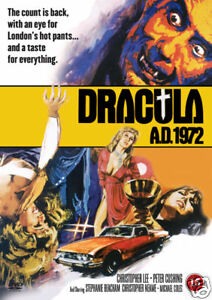
Double points for Caroline Munro, but it's still not very good.  Bringing Dracula and (in a way) Van Helsing into the "present day" was an interesting idea, but Christopher Lee has little to do in this movie, and Peter Cushing spends most of it pontificating.  It brings some of the late 60s forward into the early 70s, it gives an indication of the kind of London scene guys like Bowie and Bolan were desperate to escape, but beyond that it doesn't offer much to modern viewers.

Fun Fact 1: This is the seventh film in Hammer's Dracula series, and the sixth to feature Lee.

Fun Fact 2: Peter Cushing and (to a lesser extent) Caroline Munro also appear in Dr. Phibes Rises Again (above).


Some Bad Ones

1. Buck and the Preacher

There are some good scenes in this movie, featuring some great acting, but I think it was a mistake to let Sidney Poitier direct it.  The action doesn't seem to flow as it should, and between moments of violence this film just creaks along, often without any musical accompaniment.  I'm also not sure how this "Delta Planter's Association" would have the money to send a posse so far from Louisiana, and what their motivations for doing so might be.  I have no doubt that similar things happened in the Old West, but the tenacity of those men and the distances they travel is never really explained aside from "racism."

Fun Fact: This movie was filmed in Mexico and Kenya.  Why Kenya?  I have no idea.

2. Sleuth

In real life Laurence Olivier suggests stealing the jewels and Michael Caine tells him to fuck off.  Then, instead of engaging in an elaborate game of dress up, Caine leaves the house, never to return.  Sleuth was a adapted from a play - complete with soliloquys - and it shows.  Fans of the detective genre might enjoy this movie, but as for me the only enjoyable thing about it was Ken Adam's sets.

Wikipedia states that this movie received "overwhelmingly positive reviews."  It wasn't, however, doing anything for me.

3. 1776

Like Sleuth above I'm putting this in the "Bad" category more out of a dislike for the genre, not because it's objectively bad.  1776 is a musical about the founding of the United States, and as you might expect the prevalent social ills of the time aren't discussed in any meaningful way.  It was 1972, 1776 is a musical, and movies like this were more about bringing people together, rather than finding fault in shared history.

There's a lengthy discussion of historical inaccuracies and critical responses here.  Roger Ebert's response to this movie is, in my opinion, right on the nose.

4. Super Fly

The real star of this movie is Curtis Mayfield's soundtrack.  The rest of it?  Well, it isn't exactly Shakespeare.  A cocaine dealer tries to make enough to stop hustlin'.  The low budget is evident throughout, even if the slo-mo fight scene near the end is classic.

Fun Fact: Did I say Shakespeare?  The star of this movie, Ron O'Neal, was a very well trained actor.  He won several awards on Broadway prior to appearing in Super Fly, and he was cast in several Shakespeare productions after its release.


Somewhere, in the Darkest, Most Shameful Part of the Early 70s, Someone is Masturbating to this Movie

1. The Abductors

The second movie in the "Ginger trilogy," in which a lower budget, female version of James Bond exposes herself to and strings along various men in the pursuit of an ill-defined goal.  I'll give it this: it was better than Girls are for Loving, the third movie in this trilogy.

I'm still wondering what that business with tying the boat to the helicopter was about.  Was there a stunt removed from the film?


Porn

1. Senta: Danish Pastry

An actress visits Los Angeles and sex ensues.  There's very little info available on this film, anyone appearing in it, or the production team.  It's an hour long and the voiceover is unintentionally funny at times.


So Bad It's Good

1. Blacula

Why is star William Marshall so sweaty in this movie?  Seriously.  He sweats his way through the whole thing.

And why is it ok to dismiss the gay characters as "faggots?"  I get that it was 1972, but really, they kind of undermine whatever pretensions toward equality they had.  I'm not trying to be "woke" or anything, it's just that the intolerance is obvious from the beginning.

I will say that Blacula is WAY better than it's sequel, Scream Blacula Scream.  The first one is missing Pam Grier, but it's also a lot less talky, and the script was more to the point.  If you watch it, don't bother with questions such as "How does Blacula speak English?" or "How does Blacula know how to find places in the city?" and you'll be fine.

Related Entries:


*Some of the info in this section comes from Marvel Greatest Comics: 100 Comics that Built a Universe, which I read recently.

**Apologies if these lists are a bit America-centric.  When it comes to sports more popular outside North America I'm usually at a loss.

***Wikipedia lists this movie as appearing in 1973, not 1972.  I also wasn't sure about The Abductors.